How Staffing Agencies Can Reduce Workplace Injuries in Light Industrial Placements
By Bob Thompson on October 22, 2026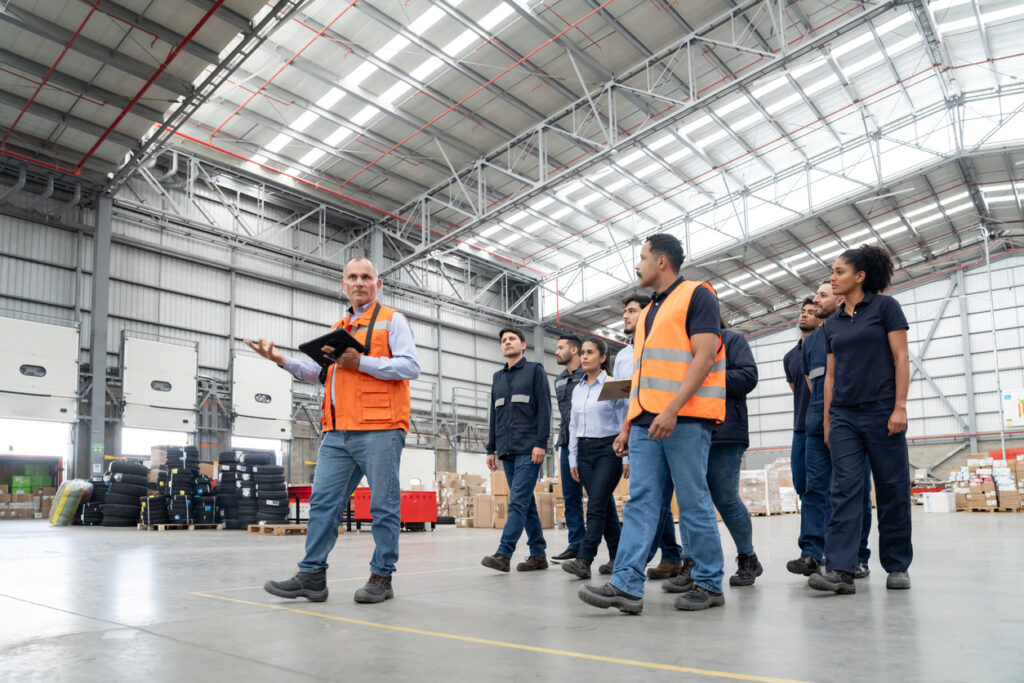
A new distribution center client calls on Wednesday and wants 20 pickers on the floor Monday morning. You have five days to decide how much you need to know about that floor before you send anyone: which tasks the pickers will perform, what equipment they will use, and who will train them on it. Injury prevention during light industrial placements occurs over those five days. Risk management for a staffing agency with a light-industrial book means verifying the site, training, and hazard controls before the first shift, then following up once workers start.
Who Is Responsible for Temp Worker Safety on a Light Industrial Site?
The Occupational Safety and Health Administration (OSHA) treats the staffing agency and the host employer as joint employers of temporary workers, and both employers carry responsibility for complying with the Occupational Safety and Health Act (OSH Act). OSHA’s s ergonomics guidance for temporary workers explains how the two employers divide the work. The host controls how the work gets done, so it leads the hazard assessment, installs the controls that reduce those hazards, and delivers site-specific training. Your agency delivers generic safety and health training and confirms that the host has completed its share.
Dividing the duties does not protect either employer from enforcement. When OSHA finds a temporary worker exposed to a recognized hazard, it may cite the agency, the host, or both, depending on the facts of the case.
Citations are only part of your agency’s exposure. When your agency employs the pickers and carries their workers’ comp coverage, as it does in a standard temporary placement, an injury on the distribution center’s floor becomes a claim on your policy. The host controls the conditions, and your agency pays for the injuries those conditions cause. Because of that split, the pre-placement checks in the next section are your agency’s responsibility.
What Should a Staffing Agency Check Before Placing Workers?
Start with a walkthrough. OSHA says the host should allow the staffing agency to walk the worksite and identify the tasks temporary workers will perform and the controls in place for those tasks. Ask the distribution center for that walkthrough and list each task your pickers will handle, along with the control that addresses its hazard.
A walkthrough shows you the floor on one day, and the host’s hazard assessments fill in what you can’t see. OSHA expects the host to lead the hazard assessment and share the results with the agency. Request those assessments for every task on your list. If the host can’t produce them, or they don’t cover the tasks your workers will perform, your agency can conduct its own assessment.
Next, verify the host’s controls before assigning workers, then recheck them at later points to confirm the host maintains them. Schedule those follow-up checks when you schedule the placement.
Finally, put the division of duties in writing. OSHA notes that the contract between the two employers can state which training each one provides, so spell out what your agency covers and what the host covers before Monday.
How To Train Light Industrial Workers Before Day One
Once you know the tasks, you can train for them. OSHA requires your agency’s generic safety training to use a language and vocabulary workers understand, and for pickers, that training should center on ergonomics.
A 2024 Government Accountability Office report found that overexertion and bodily reaction, such as lifting or bending in unsafe ways, was the most common cause of serious injuries and illnesses in general warehousing and last-mile delivery. Those injuries can lead to musculoskeletal disorders (MSDs), such as tendonitis and back pain. The same report found that transportation and warehousing had the highest rate of serious injuries and illnesses of any sector in 2022. OSHA says the training should cover lifting and work practices, equipment use, early symptoms of musculoskeletal disorders, and how and why to report injuries and symptoms.
The host still has to train your pickers on its own equipment, and OSHA expects each employer to confirm the other’s training. A certification check doesn’t count as that confirmation. For example, a host might verify that pickers hold powered industrial truck certifications but never train them on the site’s ergonomic equipment, such as lift assists or adjustable work surfaces. Before the pickers start, ask the distribution center for its site-specific training plan.
Keeping Workers Safe After the Assignment Starts
Training sets expectations before day one, and the first weeks on the job show whether those expectations hold. Ask workers to report symptoms early. OSHA says early reporting speeds up the job assessment process and helps prevent symptoms from progressing into serious injuries and lost-time claims. A lost-time claim pays wage-replacement benefits on top of medical costs, so catching a strain before it keeps someone off work lowers the cost of the claim your policy pays. Give your pickers a direct number to call the first time a task causes pain.
When a worker reports an injury or symptom, OSHA requires the host and the agency to investigate together to identify the root cause. A joint investigation helps determine whether the problem stemmed from a missing control, a skipped training step, a task change, or another cause. Each answer points to a different fix, and the fix protects the next worker you send to that position.
How Fewer Injuries Lower Workers’ Comp Costs for Staffing Companies
Each preventive step above affects your premium based on your loss history. Every claim your pickers file goes into that history, and your experience modification rate (EMR) compares those losses with the losses expected for an employer with your payroll and class codes. Fewer and less severe claims lower the mod, and a lower mod lowers your premium. Early symptom reporting and joint investigations feed that chain, because early reporting shrinks claims and investigations prevent repeat ones.
Your workers’ comp partner can support the prevention side of that equation. T2 Insurance Solutions offers workers’ comp programs for staffing firms. Those programs include customized safety and training solutions aimed at reducing workplace incidents. T2 also provides insights to help agencies manage high-risk job classifications that light industrial placements involve. When an agency combines those resources with its own site checks, training, and follow-up, risk management for a staffing agency extends from the placement decision through the renewal.
Making Safety Part of Every Light Industrial Placement
By the time the placement begins, your 20 pickers should arrive at a distribution center your agency has walked, with hazards you have reviewed and training both employers have confirmed. Risk management for a staffing agency puts your influence to work before the first shift. Contact T2 Insurance Solutions to discuss workers’ comp programs for your light industrial staffing clients.
About Bob Thompson
Bob Thompson is the CEO of T2 Insurance Solutions LLC, a specialized insurance wholesaler focused on workers’ compensation for the staffing industry. With decades of leadership experience, Bob brings deep industry knowledge and a strategic approach to complex insurance challenges. He co-founded T2 to address critical gaps in the market, delivering expert-driven solutions tailored to staffing firms and the brokers who serve them. Backed by a leadership team with over 100 years of combined experience, Bob is committed to building strong partnerships and advancing innovative strategies that help clients navigate the evolving workers’ compensation landscape.
About Jeff Tuisl
Jeff Tuisl is president and co-founder of T2 Insurance Solutions, a wholesale brokerage firm specializing in workers’ compensation programs for temporary staffing companies and professional employer organizations. With more than 30 years of experience in the property and casualty insurance industry, Tuisl built his career across underwriting and brokerage, including 24 years as a principal at Assurance Agency, a Marsh McLennan Agency, where he grew a national staffing book of more than 500 clients. He holds the CPCU designation and is a graduate of the University of Illinois Urbana-Champaign, based in the Chicago area.
About T2 Insurance Solutions
T2 Wholesale Insurance Brokers is a reliable expert in workers’ compensation insurance. With a century of combined experience, T2’s founders bring unparalleled insight and understanding to the table. Specializing in catering to the unique demands of workers’ compensation insurance, T2 prides itself on its ability to craft comprehensive and competitive insurance solutions that address the diverse requirements and challenges faced by all industries.