
The Hidden Risks in Insurance for Staffing Agency Clients
By Bob Thompson on May 27, 2026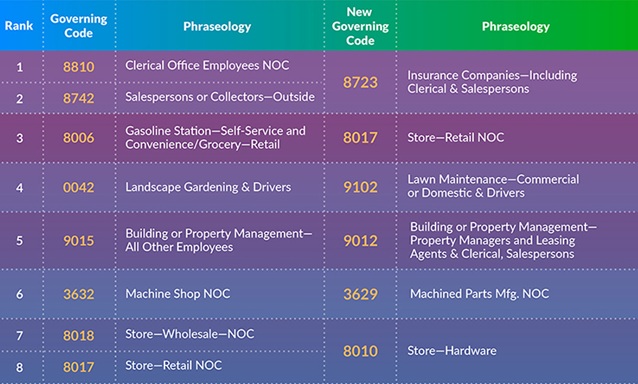
Most staffing firms believe they’re properly covered. Many aren’t. The gap isn’t usually a missing policy — it’s the details buried inside the one they have. Insurance for staffing agencies is complex, and the exposures that tend to create the worst outcomes are rarely the obvious ones.
So, what are the biggest hidden risks in staffing insurance? Here’s where they actually show up.
Why Staffing Agencies Face Unique Insurance Risks
Staffing firms operate under a layered employment model that standard commercial policies weren’t designed to handle. Workers move between job sites and client companies constantly, which means the risk profile shifts with every placement.
Who bears responsibility when a claim occurs — the staffing agency or the host employer? The Occupational Safety and Health Administration treats both as jointly responsible for temporary worker safety, but that shared accountability doesn’t always translate cleanly into how coverage is structured. The result is ambiguity that can surface as a denied claim or a disputed loss.
Misclassification of Temporary Workers
Worker misclassification is one of the most consequential — and most preventable — problems in staffing insurance. When a worker in a light industrial role is coded as clerical, the premium appears lower on paper. But when an auditor reviews the payroll, the correction can mean significant retroactive charges and penalties. The National Council on Compensation Insurance maintains the classification system used in most states, and auditors are trained to catch exactly these discrepancies.
The downstream effect on the experience modification rate (EMR) is just as damaging. Inaccurate classifications distort the claims history data that drives EMR calculations, which means a staffing firm can end up paying inflated premiums for years based on a classification error that was never corrected. Brokers who review workers’ compensation programs proactively — rather than waiting for audit season — catch these issues before they compound.
Gaps Between Staffing Firm and Client Coverage
Coverage disputes between staffing agencies and their clients are more common than most brokers anticipate. Contractual risk-transfer language is often written with permanent employees in mind, leaving temporary placements in a gray area when a loss occurs. Contractual risk-transfer language is often vague, and the alignment between what the staffing agency’s policy covers and what the client assumes it covers can be incomplete.
A staffing firm that assumes its policy covers a specific client site — without confirming how the host employer’s coverage interacts with its own — can find itself exposed when a claim arises and both carriers point to the other policy.
Multistate Exposure and Compliance Risks
Staffing firms that place workers across state lines face a compliance landscape that compounds with every new jurisdiction.
Workers’ compensation laws, reporting requirements, and premium rate structures vary significantly by state, and the U.S. Department of Labor enforces those distinctions. A staffing firm operating in multiple states with a policy that wasn’t structured for multistate operations may have workers who aren’t properly covered — without knowing it until a claim surfaces.
Hidden Claims Drivers That Raise Costs
Temporary workers are typically placed in hazardous roles and may receive inadequate safety training from either the agency or the host employer. High turnover compounds the problem — with workers constantly cycling through new environments and equipment, the frequency of first-time placement injuries remains elevated, and carriers take notice at renewal.
Poor claims management processes accelerate the damage. Delays in reporting, inconsistent return-to-work protocols, and a lack of visibility into open claims all push the EMR higher and draw underwriting scrutiny.
Identifying Risk Before It Becomes a Claim
The risks that cost staffing firms the most tend to be the ones that were never identified as risks at all — classification drift that accumulates over multiple policy years, coverage gaps that only become visible after a claim, or multistate compliance failures that surface during an audit.
Brokers who serve this market well don’t just place coverage. They conduct ongoing program reviews, flag classification issues before renewals, and coordinate with wholesale partners who understand the staffing-specific nuances that standard markets miss. That’s the kind of partnership that protects accounts — and keeps them.
Ready to uncover the risks your staffing clients might be carrying? Connect with T2 Insurance Solutions to access the specialized expertise and market relationships that help brokers stay ahead of these exposures.
FAQ on Hidden Insurance Risks for Staffing Agencies
What is the most common hidden risk in staffing insurance?
Worker misclassification — specifically, assigning incorrect NCCI class codes to temporary employees — is among the most common issues. It leads to premium discrepancies, audit adjustments, and long-term EMR damage that can take years to correct.
How do multistate operations affect a staffing firm’s workers’ comp coverage?
Each state has its own workers’ compensation laws, rate structures, and reporting requirements. A policy not structured for multistate operations may leave workers in certain states without adequate coverage, creating compliance exposure and potential claim disputes.
What role does the experience modification rate play in staffing insurance costs?
The EMR is a multiplier applied to workers’ compensation premiums based on a firm’s claims history. Misclassifications, delayed claims reporting, and poor return-to-work practices all push the EMR higher — directly raising the cost of coverage at every renewal.
About Bob Thompson
Bob Thompson is the CEO of T2 Insurance Solutions LLC, a specialized insurance wholesaler focused on workers’ compensation for the staffing industry. With decades of leadership experience, Bob brings deep industry knowledge and a strategic approach to complex insurance challenges. He co-founded T2 to address critical gaps in the market, delivering expert-driven solutions tailored to staffing firms and the brokers who serve them. Backed by a leadership team with over 100 years of combined experience, Bob is committed to building strong partnerships and advancing innovative strategies that help clients navigate the evolving workers’ compensation landscape.
About T2 Insurance Solutions
T2 Wholesale Insurance Brokers is a reliable expert in workers‘ compensation insurance. With a century of combined experience, T2’s founders bring unparalleled insight and understanding to the table. Specializing in catering to the unique demands of workers‘ compensation insurance, T2 prides itself on its ability to craft comprehensive and competitive insurance solutions that address the diverse requirements and challenges faced by all industries.